
Two cheddar wheels produced from the same vat can still turn out different. One can hold a little more moisture than the other, and this difference might seem small on a lab report. However, these slight differences can add up fast across a full day of production. A commercial cheese press is where that outcome gets decided. Pressure and time control how much whey leaves the curd before the cheese ever reaches the cooler.
The University of Wisconsin’s dairy research center concluded that swings of a single percentage point in cheese moisture to six-figure differences in a plant’s annual revenue. That’s not a rounding error. It’s the gap between a press cycle that’s dialed in and one that drifts a little from batch to batch.
What Consistent Pressing Actually Controls
The process of pressing does two jobs at once. It expels whey to bring the curd down to a target moisture level. It also shapes the block or wheel into its final form. Both jobs depend on even pressure across the whole surface of the curd, held for a consistent length of time. The curd near the edges of a form drains differently than curd packed toward the center, which is exactly why uniform pressure across the full surface matters more than the average pressure applied.
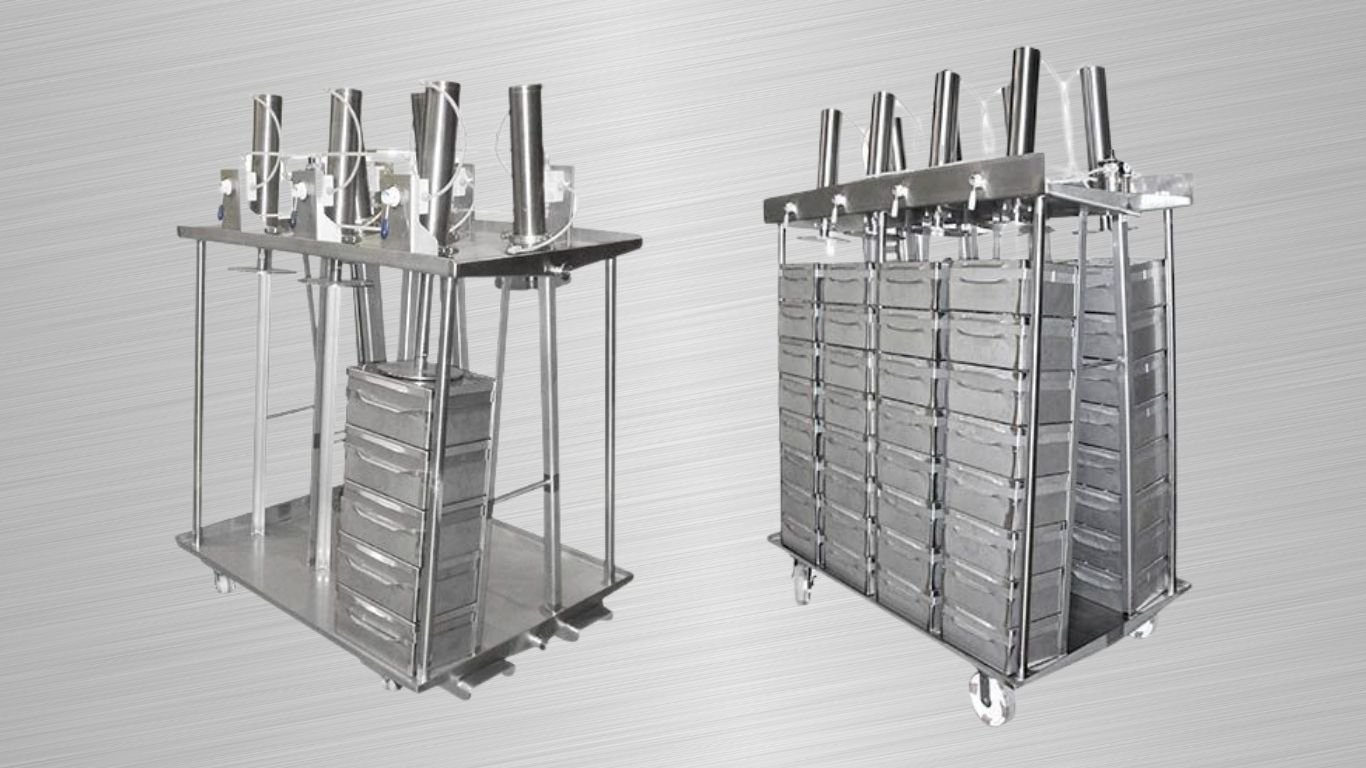
Uneven pressure leaves soft spots that trap extra moisture. Inconsistent timing means one batch finishes drier than the next. That happens even when everything else in the vat room stayed the same. Neither problem shows up until the cheese hits the scale or the grader, and by then the batch is already made.
Why an Automated Commercial Cheese Press Improves Consistency
Manual pressing depends on whoever is running the line that shift. Pressure gets adjusted by feel. Timing gets tracked on a clipboard or from memory. Both are reasonable ways to run a small operation. They also introduce variation that shows up in the yield numbers at the end of the month.
An automated press holds pressure and cycle time to a set program every run. It doesn’t drift because someone got pulled onto a different task halfway through a batch. Curd pressing times and temperatures are exactly the kind of variable a plant can standardize. That’s much easier once a machine, rather than a person’s judgment, is running the cycle. A logged cycle also gives a plant something a clipboard never did: an exact record of what happened on every single batch, tied to a batch number instead of a shift supervisor’s memory.
Staying Within Legal Moisture and Fat Limits
Moisture control isn’t only about yield. FDA standards of identity for cheese set hard ceilings on moisture and floors on fat content. Cheddar, for example, can’t legally carry more than 39 percent moisture. A press that consistently lands just under that ceiling captures more yield than one that plays it safe several points lower out of caution.
Missing the standard in the other direction creates a labeling problem, not just a quality one. A press program built around real target numbers keeps a plant inside the legal range. It does that without giving up the yield that comes from pressing close to the line rather than well clear of it.
Built by Koss for the Plant’s Whole Cheese Line
Koss Industrial designs cheese-pressing systems as part of a broader curd handling line. It isn’t treated as a standalone machine bolted onto whatever came before it. A press that’s sized and tuned for how cheddar or colby actually behaves ties directly into work like portion control on a commercial cheese cutter. A consistent block out of the press feeds a consistent cut downstream.
That same equipment needs a foundation built to handle repeated cycles under load. It’s the same reason durable stainless leveling feet keep other heavy equipment level and stable. Sanitation matters just as much as mechanics here. Lessons from modern tank cleaning equipment about consistent, repeatable cleaning apply directly to press components that contact curd all day. Koss builds for the cheese industry specifically, and not for food processing in general terms.
A press cycle that holds its numbers run after run pays for itself in yield alone. That’s before consistency or labor savings even enter the conversation. A Wisconsin cheese plant’s own production numbers already show where pressing consistency is costing yield. The Koss team can help build the pressing systems that hold those numbers steady.


