
A Guide to Selecting the Right Tank Heads for Food Grade Storage
The geometry of tank heads is not a secondary decision. It directly affects how your vessel drains, how it handles pressure, and whether it meets the regulatory standards your facility operates under. Selecting the wrong profile means building a compliance or maintenance problem into your equipment from day one. For engineers and procurement leads specifying food grade stainless steel storage vessels, this is a practical necessity, not a formality.
Why Tank Heads Drive Sanitation Outcomes
Sanitary design starts at the vessel walls. Tank heads are the end caps welded onto cylindrical vessels. Their profile shapes how fluid collects, flows, and is removed during cleaning. In cheese, dairy, and beverage processing, complete drainage is not optional. Residual product or cleaning solution that pools in a vessel promotes bacterial growth. It also compromises product quality and creates regulatory exposure.
The 3-A Sanitary Standards define hygienic design requirements for dairy equipment in the United States. They specify that product contact surfaces must drain completely and be fully accessible for cleaning. Tank heads selection plays a direct role in meeting that standard. 3-A Standard 11 addresses storage tanks specifically. It covers surface finish, weld quality, and drainability requirements in detail.
Common Tank Head Profiles and Where Each Applies
Dished heads, sometimes called ASME flanged and dished heads, are the most common profile in sanitary processing vessels. Their shallow curve supports moderate internal pressure ratings. They provide acceptable drainage when the tank is oriented correctly. For general food grade storage at standard operating pressures, this profile is the practical baseline.
Elliptical heads offer a deeper dish and a higher pressure rating. In practice, they are the better choice for vessels that see elevated pressure during processing or CIP cycles. The tighter radius at the knuckle requires careful weld finishing to eliminate crevices. A competent fabricator handles that as a matter of course.
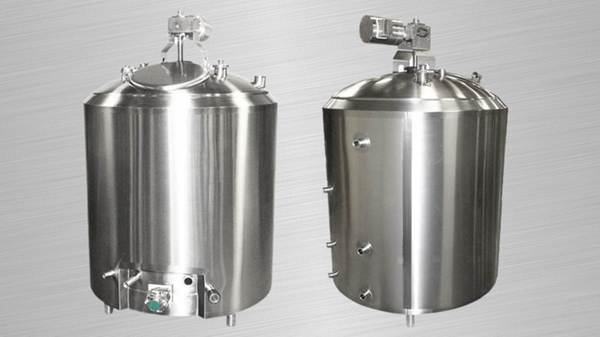
Hemispherical heads provide the highest pressure capability of any tank heads profile. They are also the most expensive to fabricate. For most food grade storage applications, hemispherical heads exceed what the process requires. That said, in high-pressure biopharma or specialty dairy applications, the structural advantage can justify the cost.
Flat heads appear in low-pressure applications and on access covers. They are not suitable as primary heads for pressurized storage vessels. You will find them on COP tanks and clean-out-of-place systems where internal pressure is not a factor.
Cone-bottom configurations deserve mention here as well. A conical bottom on a vertical tank ensures complete gravity drainage to a single outlet. In cheese and dairy storage where whey separation or full product evacuation matters, this design solves a drainage problem that a standard dished profile cannot.
Four Factors to Evaluate Before You Specify Tank Heads
The right profile for a given application comes down to four factors.
First, operating pressure. What is the maximum internal pressure this vessel will see during processing and CIP? That number determines whether a standard dished head is sufficient or whether an elliptical profile is required.
Second, drainage requirements. Does this vessel need to drain completely by gravity? If so, the tank heads geometry and the outlet placement must work together. A dished head with a centrally placed outlet on a horizontal tank drains very differently than the same profile on a vertical tank with a bottom outlet.
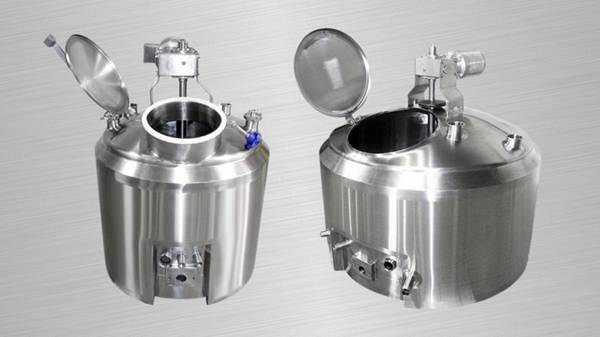
Third, cleanability. Does the internal geometry allow for full CIP spray coverage? Tight radii, internal baffles, and weld profiles all affect whether a spray ball or rotary jet head can reach every surface. For that reason, tank heads selection should happen in coordination with cleaning system design, not after it.
Fourth, regulatory compliance. What standards govern this vessel? 3-A certification, FDA PMO rules for Grade A dairy, and USDA specifications for meat and poultry processing each impose specific constraints. The FDA’s Pasteurized Milk Ordinance outlines surface and design requirements that apply directly to dairy storage equipment. Confirming the applicable standards before fabrication avoids costly rework.
Matching the Right Tank Heads to Your System
Koss Industrial fabricates custom stainless steel vessels across the full range of tank heads, from standard dished profiles for general food grade storage to cone-bottom configurations for complete-drainage applications. Each vessel is engineered to the specific requirements of the process it serves, not adapted from a catalog after the fact.
If you are specifying a new storage tank or evaluating a replacement, the Koss Industrial processing equipment page provides an overview of available vessel configurations. The Koss engineering team can also review your pressure, drainage, and sanitation requirements directly and recommend a profile that fits the application from the start.


