
Improving Facility Hygiene With Modern Industrial Tank Cleaning Equipment
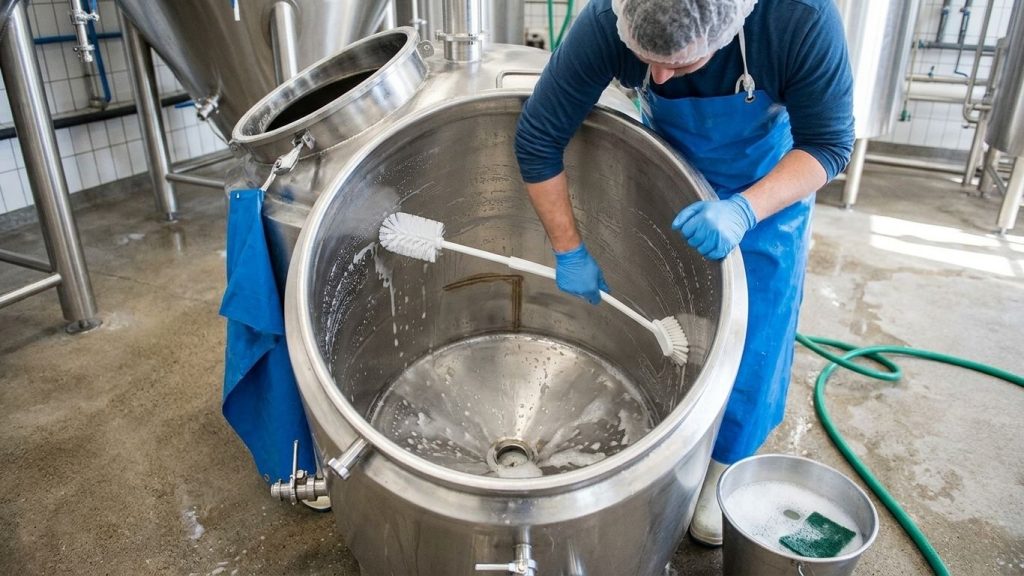
Most food plants still rely on manual cleaning for their tanks and vessels. Workers scrub surfaces by hand, shift after shift, and do their best to hit every corner. The problem with this method is that results vary. One crew does a thorough job. However, the next misses a spot. Over time, that gap creates real risk. Modern industrial tank cleaning equipment closes that gap by taking human error out of the equation.
Why Manual Cleaning Falls Short
Manual cleaning depends on people. That is its core weakness. In a cheese or dairy plant, for example, one missed surface can become a home for bacteria. Bacteria that takes hold is hard to find and harder to remove. As a result, a single bad cleaning cycle can affect product quality for days or longer.
In particular, Biofilm is a specific threat. When bacteria is not fully removed in a cleaning cycle, it bonds to the vessel surface and forms a protective layer. That layer resists standard cleaning chemicals. It also hides from visual inspection. So a tank can look clean and still carry a contamination risk that only a swab test will catch.
At the same time, labor cost is another problem. Sanitation crews make up a large part of shift staffing in most food plants. In recent years, finding and keeping those workers has become harder. The International Dairy Foods Association has tracked this trend closely, noting that labor gaps in food plants have grown year over year. So facilities that rely on manual cleaning carry two risks at once: a hygiene risk and a staffing risk.
Thankfully, industrial tank cleaning equipment solves both. It runs the same way every time. And it does the work with far fewer people on the floor.
How Tank Cleaning Devices Work
The basic idea is simple. A cleaning device mounts inside the tank and sprays solution across every surface in a set pattern. Because the pattern never changes, the results never change either. That consistency is the key advantage over manual cleaning.
There are three main types of industrial tank cleaning equipment. Rotary jet heads fire a strong, focused stream that sweeps the full interior in a 360-degree pattern. They work best in large tanks or vessels with heavy soil buildup. Meanwhile, rotary spray heads use a wider, softer spray. They suit mid-size tanks where soil loads are lighter and cycle time matters. Finally, static spray balls have no moving parts at all. They are simple, easy to keep clean, and reliable in smaller tanks with basic shapes.
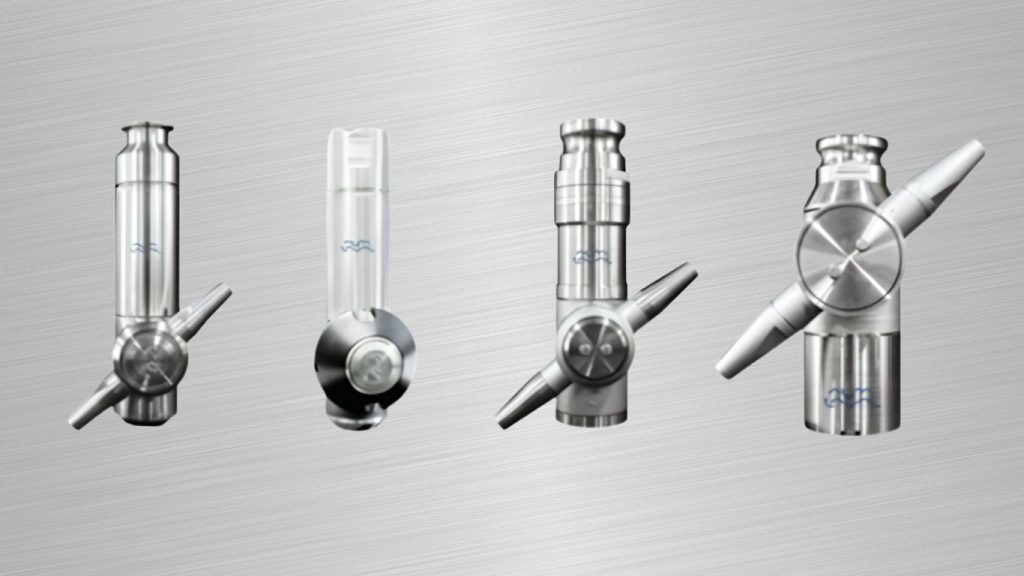
Choosing between them comes down to three things: tank size, how soiled the vessel gets between cleans, and how much time the CIP cycle has to work. A rotary jet head in a small tank is overkill. Meanwhile, a static spray ball in a large, heavily soiled vessel will not do the job. Getting the match right is what separates a cleaning system that works from one that just looks like it does.
In each case, flow rate and water pressure must match the tank size and the soil load. Too little pressure and the device will not clean well. Too much and you waste water and chemicals with no added benefit. For that reason, device selection should always start with the specs of the tank it will serve.
Matching Industrial Tank Cleaning Equipment to Your CIP Setup
Tank cleaning devices work as part of a clean-in-place system. The CIP system controls water flow, heat, chemical strength, and cycle timing. However, the cleaning device and the CIP system must work together. Choosing one without the other in mind leads to poor results.
A common mistake is picking a cleaning device first and then trying to fit the CIP system around it. That approach often leads to low pressure at the device, weak coverage, and cycles that look fine on paper but leave residue on tank walls. In contrast, designing both together from the start avoids that problem entirely.
Koss Industrial builds complete CIP skids and tank cleaning systems that pair the right cleaning device with the right flow rates, pumps, and controls for each vessel. Everything is matched to the process from day one. This means that nothing is left to guesswork on the floor.
The result is a cleaning system that runs the same way every cycle. Less labor. Better hygiene. Full records of every clean. And staff freed up for work that actually needs a human touch.
If your plant is ready to move past manual cleaning, the Koss team can review your tanks and current setup and recommend industrial tank cleaning equipment that fits. Contact us to start a conversation. We’ll be very happy to help out.


